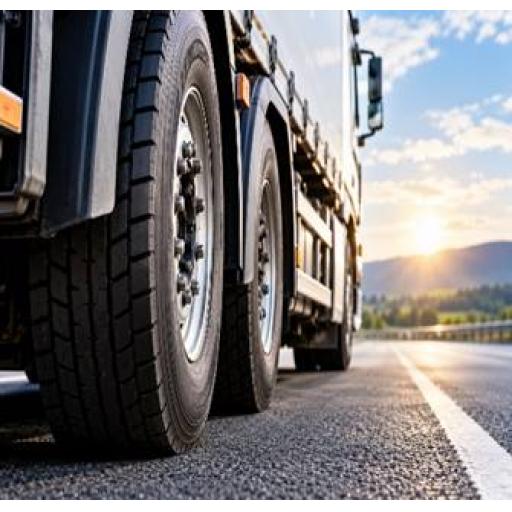
European regulators are moving closer to introducing new rules governing truck and bus tyre abrasion, potentially changing how commercial vehicle tyres are tested, developed and ultimately selected by operators.
The UNECE Tyre Abrasion Task Force met in Brussels on 8–9 October, with one of its key objectives being to determine how tyre abrasion from C3 truck and bus tyres can be reliably measured for future regulation.
While this might appear to be another highly technical regulatory discussion, its implications for operators, tyre manufacturers and the commercial tyre trade could be significant. Europe is increasingly focusing on tyre wear because particles released as tyres abrade are regarded as a source of non-exhaust vehicle emissions.
It may be necessary to distinguish between tyres designed primarily for long-haul, regional distribution, urban delivery and other specialist applications, rather than treating every C3 tyre in exactly the same way.
There are also fundamental differences between steer, drive and trailer tyres, each of which is designed around different performance priorities.
The decisions taken during the development of the new testing regime could therefore influence future tyre compounds, tread designs, expected mileage and potentially tyre prices.
Tyre abrasion regulation could eventually make whole-life tyre performance even more important when purchasing tyres.
A tyre’s purchase price is only one element of its real cost to a fleet. Mileage, fuel efficiency, casing durability, regroovability and suitability for retreading can have a much greater influence on the ultimate cost per kilometre.
If abrasion performance becomes a regulated and measurable characteristic, fleets could eventually have another useful benchmark for comparing tyres.
However, tighter regulatory requirements could also increase tyre manufacturers’ development and testing costs, some of which could ultimately filter through into tyre prices.
Retreading could become even more important
Premium truck tyre casings can potentially have several lives through regrooving and retreading, significantly increasing the useful life of the original casing.
As European transport policy places increasing emphasis on sustainability, resource efficiency and the circular economy, the ability to extend casing life could become an increasingly valuable part of the environmental argument for retreaded commercial vehicle tyres.
The work also needs to be viewed against the much wider Euro 7 regulatory programme. Unlike previous Euro emissions standards, which concentrated overwhelmingly on exhaust emissions, Euro 7 introduces requirements covering non-exhaust emissions including brake particles and tyre abrasion.
For the road transport industry, that represents an important change.
As exhaust emissions fall with newer diesel powertrains and the gradual introduction of zero-emission vehicles, regulators are paying much greater attention to emissions generated elsewhere on the vehicle.
Tyre wear is moving from being primarily a fleet operating-cost issue to becoming an emissions and regulatory issue as well.
Further information: https://www.hgvireland.com/eu-turns-attention-to-truck-tyre-wear-as-new-abrasion-rules-move-closer/